
When one app reads answer sheets and another needs the capability, sharing code is only one option. First establish whether the domain behavior is shared.
A versioned processing boundary
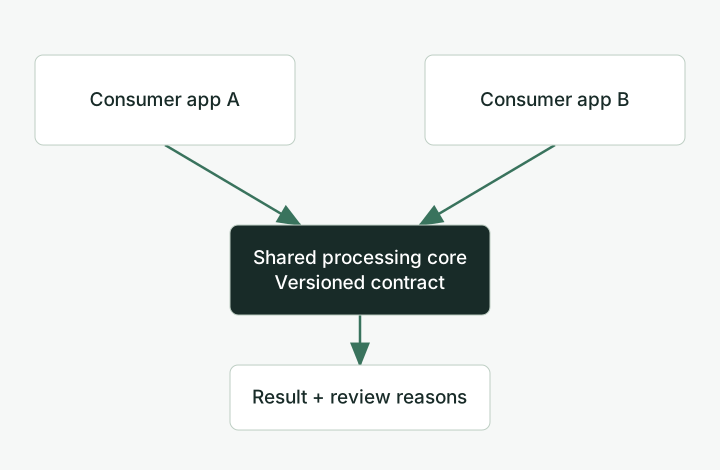
Identify the boundary
Compare layouts, input quality, algorithm versions, result schema, confidence, and manual review. App navigation and assessment rules should not become hidden dependencies of a common reader.
Library or service?
A library simplifies local calls but couples deployments and runtimes. A service provides an independently deployed contract, while adding availability, latency, and ownership concerns. Both need compatibility tests.
A proposed contract
request: document_id, layout_version, input_reference
result: document_id, algorithm_version, status,
        extracted_answers, confidence, review_reasons
This is a public design example, not an existing internal contract. Add authorization, idempotency, retention, timeouts, and compatibility rules.
Questions before committing
Who owns incidents and releases? Can consumers pin an algorithm version? Which fixtures test compatibility? Can results be reproduced? How do partial reads reach review? These answers determine whether the boundary is sustainable.
References and further reading
Primary sources for the technical concepts in this article. The examples and decisions above are my synthesis, not quotations from these sources.
- AWS Prescriptive GuidanceStrangler fig pattern
Incremental boundary migration; useful when extracting a shared capability.
- AWS Prescriptive GuidanceRetry with backoff pattern
Idempotency and transient-failure handling across service boundaries.